On 27 October 2025, the Constitutional Council (CC) declared Paul Biya the winner of the 2025 presidential election in Cameroon. The streets of Yaounde as well as other cities were heavily militarized prior to the proclamation of the result as the leading opposition candidate, Issa Tchiroma Bakary, former minister of communication and minister of employment and vocational training, had already declared himself winner before the CC’s proclamation.
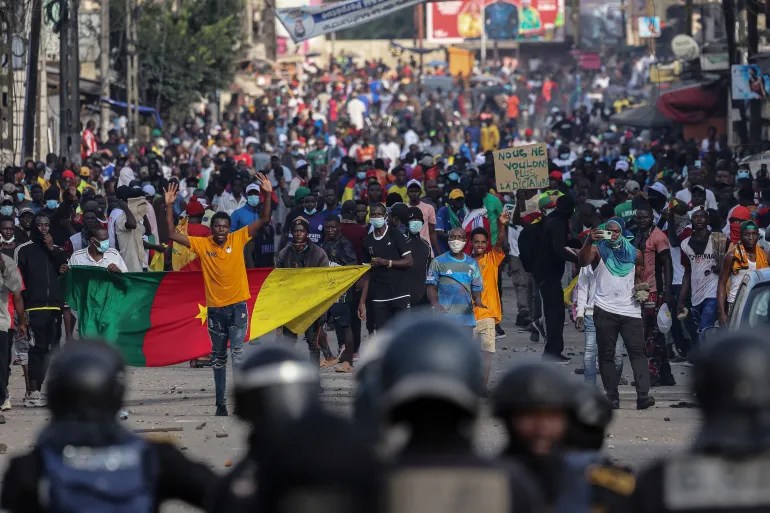
Since the proclamation of the result, there’s been protests in cities like Douala, Bafoussam, Garoua, Maroua, among others as most people think that the 43-year old Biya regime rigged the election. According to Human Rights Watch, at least four people have lost their lives so far as government forces crack down heavily on protesters, shooting unarmed civilians with live bullets. According to N’zui Manto, a popularly Facebook influencer, more 26 people have lost their lives.
2008 Elimination of Presidential Term Limit
Paul Biya – who is 92 – came to power in 1982 and later engineered a constitutional amendment in 2008 that eliminated presidential term limits, allowing him to run for president indefinitely. The amendment was passed by the National Assembly, which is heavily dominated by Biya’s ruling party, the Cameroon People’s Democratic Movement (CPDM). In addition to this, a provision was also added granting the president immunity from prosecution after leaving office, hence making his actions and omissions during his time in power legally unquestionable.
Government Peace and Unity Communication
Initially, the result was supposed to be proclaimed on October 23. However, sensing the tension in the air, the proclamation date was postponed to October 27. Government officials, religious leaders and local authorities used this period to caution the people in their respective jurisdiction about the need for peace and unity, and most especially, discouraged them from taking to the streets when the result was proclaimed. Some government officials went as far banning any assembly of three or more people on the day the result was proclaimed.
Historical Lessons for Cameroon
Peace and unity, for the most part, shouldn’t be preached to people as a sermon. I’m not saying that communication on peace and unity is pointless. Here’s my point: peace and unity are more of outcome that things are going right; while the absence thereof are symptoms that something isn’t working.
History is full of examples where lasting peace was achieved by addressing tangible root causes like political exclusion, economic inequality and historical grievances rather than focusing on the visible violence. To address all the violence that resulted from apartheid in South Africa, oppressive laws had to be dismantled; multiracial democracy had to be established, allowing all citizens to freely and fairly participate in the political process; the Truth and Reconciliation Commission (TRC) was set up to address the atrocities committed under the apartheid regime. The TRC provided a platform where victims shared their stories and perpetrators confessed in exchanged for amnesty, fostering a complex and difficult process of national healing.
Cameroon needs strong institutions that can independently ensure that that the country’s needs always come first. It’s such institutions that will ensure democracy and good governance. Where there’s democracy and good governance, not only is there development for all, but people feel heard and protected. Peace and unity become the default outcome in such a context, and good communication only comes in as a finishing touch to consolidate this.
The Dangers of Unheard Voices
When people get to the point where they feel like their voices aren’t heard, they feel suffocated and usually end up fighting back more because they need their voices heard than they love violence. The respect of democracy and the effective implementation of good governance are there to ensure that the people’s voices are not only heard but also respected.
Tubuo
 Tubuo Writes
Leave a comment